
A Portland truck accident lawyer has to look well beyond the moment of impact. In a serious commercial vehicle case, the crash is usually only the visible end of a much longer chain of decisions and events involving driving hours, dispatch pressure, maintenance, cargo, driver qualifications, and electronic records stored by the truck itself.
That’s what makes these cases different from ordinary car accident claims.
A semi traveling through Portland on I-5, I-84, I-205, or U.S. 26 may be owned by one company, operated by another, hauling freight for a third, and covered by several layers of insurance.
If the truck jackknifes, loses control, or can’t stop in time, the driver’s mistake may be only one part of the story. The consequences can be severe. FMCSA has reported hundreds of thousands of large truck crashes nationwide in a single year, including thousands of fatal crashes and more than 100,000 injury crashes.
A recent collision in Troutdale illustrates why technical investigation is so important. In May 2026, a sedan and semi-truck collided near Northwest Marine Drive in Multnomah County. The sedan caught fire, the 28-year-old driver died, and a passenger suffered critical injuries.
A crash like that may require much more than a police report. The real question isn’t just whether the truck driver made a mistake.
It’s whether the entire commercial operation helped create the conditions for that mistake.
Dozier Law Group has years of expertise in Portland and throughout Oregon, navigating truck Accident laws. Trust our team for effective representation, as we leverage our deep understanding of local regulations and a track record of success to guide you through the complexities of trucking accident litigation
Federal Motor Carrier Safety Regulations can shape your truck accident case because they govern how commercial drivers and carriers are supposed to operate. These rules cover far more than basic driving behavior.
They also regulate the business that goes on behind the truck.
Hours-of-service rules often become especially important when fatigue is suspected.
For many interstate property-carrying drivers, federal rules generally limit driving to 11 hours after 10 consecutive hours off duty. Drivers also typically work within a 14-hour duty window and must take qualifying breaks after extended periods of driving.
That sounds straightforward until exceptions come into play. Oregon has different rules for some intrastate operations. Certain qualifying property carrying drivers may operate under longer driving and duty periods than interstate drivers. That means an FMCSR violations lawyer can’t simply look at a logbook, spot a long shift, and declare a violation.
The better questions are:
That matters. A technical violation can be useful evidence, but it still needs a connection to the crash.
Liability in a Portland semi-truck accident can involve more than the driver, because commercial trucking typically involves multiple companies with distinct responsibilities.
The driver may have caused the immediate collision, but the carrier could have made the decision that led there. Under long-standing Oregon law, an employer can be responsible for an employee’s negligent conduct when the employee was acting within the scope of employment. This could apply when a company driver crashes while making a delivery on an assigned route.
Maintenance records are important for the same reason. A brake failure could point toward the carrier and may also raise questions about an outside repair company.
The cargo itself can create another layer. Improperly secured freight can shift during a turn or emergency maneuver, changing the truck’s center of gravity and contributing to a rollover or jackknife.
Potential defendants can include the truck driver, the motor carrier, trailer owners, a maintenance company, a cargo loading contractor, a parts manufacturer, and other negligent drivers. Good legal help starts by mapping that entire chain. The company name painted on the tractor might not tell you who actually controlled the operation.
Certain trucks present special dangers. Logging trucks navigating mountain passes, delivery trucks for Amazon, UPS, or FedEx maneuvering through downtown traffic, and large commercial rigs on I-5 all have unique risk factors. Some collisions, like underride and oversize truck accidents, are severe because the smaller vehicle slides under or over the truck.
Once again, each type of truck requires specialized legal attention to make sure victims get fair compensation for their injuries, losses, and other damages.
Our Portland truck accident lawyers secure digital truck evidence by identifying every system that may contain useful data and preserving it before it gets deleted, overwritten, or lost.
People often refer to all of this as the truck’s “black box.” That’s a convenient term, but it’s not very precise. Several electronic systems may be involved. The ELD is one of them. Electronic logging devices mainly track hours of service. They can show when a driver was on duty, driving, resting, or making changes to log entries.
Federal rules generally require applicable carriers to retain ELD records for six months.
That retention window matters. ELD data may not tell you the truck’s exact speed one second before impact, but other systems may.
A preservation strategy may involve several legal steps:
Identify the tractor and trailer. Vehicle identification numbers, carrier information, and ownership records can help determine what recording systems are available.
Send preservation demands. The carrier needs to be told to preserve ELD records, video, telematics, dispatch messages, maintenance files, and relevant electronic data.
Preserve the physical truck. Repairs or salvage can make later electronic downloads harder.
Compare ELD records with outside documents. Things like fuel receipts, bills of lading, toll records, delivery times, and dispatch communications can show inconsistencies.
Compare multiple digital systems. GPS, video, engine data, and ELD information may each tell a different part of the story.
Use qualified experts when needed. You’ll want to preserve the original data and document how the information was extracted.
The goal isn’t to collect technology for its own sake, but to reconstruct what happened before impact.
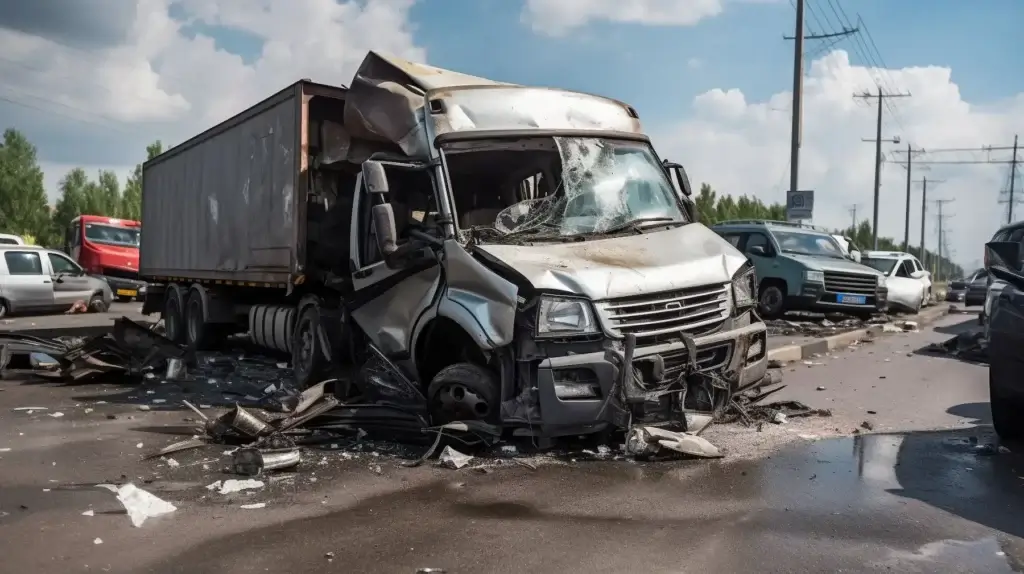

Long-term truck accident damages should reflect what the injury will cost over time, not just what has already been billed. Serious commercial vehicle crashes can leave someone with permanent physical, neurological, or financial losses.
That changes the valuation completely.
Catastrophic injuries may include traumatic brain injuries, spinal cord injuries, amputations, severe burns, internal organ injuries, and more. If you suffer spinal cord damage, you may need treatment and assistance for decades. With a severe brain injury, you may eventually return home but never return to the same career or lifestyle.
That means the damages analysis typically needs to include:
Commercial insurance limits matter too. Federal law requires most motor carriers to maintain minimum levels of financial responsibility, and those minimums can be higher for certain hazardous material operations.
But minimum coverage isn’t necessarily the same as actual coverage. Large carriers may have higher primary policies, excess insurance, or umbrella coverage. That becomes especially important in a wrongful death truck accident or a case involving permanent disability.
A technical damages investigation should answer two separate questions: What is your case really worth, and what insurance or assets may actually be available?
Yes. Trucks must follow strict federal and state regulations regarding hours of service, load limits, and vehicle maintenance. Violations of these rules can establish negligence in your favor. Lawyers often investigate driver logs, inspection records, and company compliance to strengthen claims in Portland crashes.
Absolutely. Multi-vehicle collisions are common on Portland highways and city streets. Liability may be shared among several drivers or companies. We will make sure all responsible parties are held accountable.
Yes. Crashes near high-traffic areas like the Hawthorne, Morrison, or Steel Bridge, or on I-5 and I-205, can be more complicated due to traffic patterns, bridge regulations, and high speeds. Evidence collection and expert analysis are often needed to accurately prove fault and damages.
Oregon law allows a claim for personal injury or property damage to be filed within 2 years of the crash (ORS 12.110). If a government vehicle or entity is involved, the notice period is shorter (ORS 30.275). Working with a Portland truck accident lawyer makes sure deadlines are met and your rights are protected.
Our Portland truck accident lawyers compare ELD records with dispatch messages, review engine data against eyewitness accounts, determine which hours-of-service rules applied, inspect maintenance records, and trace responsibility through every business involved.
At Dozier Law Group, we understand that in a serious Portland semi-truck crash, the most important evidence may never appear in the police report. It may be sitting in an ELD server, a fleet management system, a maintenance file, an engine module, or a dispatch record.
That evidence can disappear on a schedule, which is why the technical investigation has to start early. Not every truck crash belongs in court, and not every regulatory violation proves negligence. But commercial trucking generates a detailed paper and digital trail, and when that trail is preserved and analyzed correctly, it can tell the real story of the crash.
Contact us today and let’s start putting together the story that protects your rights and your financial future.