
A car crash can, literally, flip your life upside down in seconds. Pain, missed work, vehicle repairs, and insurance complications all hit at once. If you’ve been hurt in a vehicle accident in Portland, you usually have a clear path to compensation, but you have to protect it early, document the facts, get the proper medical care, and avoid the common insurance traps that quietly shrink claims.
That’s when you want a Portland car accident lawyer from Dozier Law Group in your corner.
The state of Oregon has rules that can affect your case right away, including required minimum insurance, required crash reporting in some situations, and firm deadlines to bring a lawsuit. Portland crashes happen everywhere, on I-5 at the Rose Quarter, I-205 around Gateway, and on busy surface streets like Powell, MLK Jr Blvd, and Burnside.
The right legal strategy will depend on where the crash happened, who was involved, which coverage applies, and how your injuries are likely to unfold over time.
A Portland car accident attorney helps solidify your claim quickly by preserving evidence, handling insurer communications, identifying every liable party, and building a damages story that matches your real life, not the insurance adjuster’s spreadsheet.
That early work can often be the difference between a quick, undervalued check and a settlement that actually covers your medical needs, wage loss, and a long period of pain and limitations.
After a crash, insurance companies move fast; they take statements, request broad medical releases, and push early offers before the complete injury picture is clear. Your lawyer takes control of the timeline, gathers records the right way, and makes sure your medical treatment and documentation line up with the legal elements they must prove.
With years of expertise in Portland and throughout Oregon, we navigate car accident laws with precision. Our proven results demonstrate our commitment to holding negligent parties accountable. Trust our team for effective representation in seeking justice for car accident victims.
On a serene April afternoon, Stephanie Rife’s life took an unexpected turn as she navigated her Chevrolet Traverse on Northeast Burnside, heading westbound near the intersection of NE Cleveland. Little did she know, this routine drive would lead to a life-altering car accident, forever changing her trajectory.
Stephanie conscientiously slowed and came to a stop in the far-right lane, activating her right turn signal in preparation for a turn. Unbeknownst to her, the defendant, operating a Dodge Durango truck in the same lane and direction, failed to maintain control of her vehicle. In a tragic moment, the defendant’s negligence resulted in a collision, with Stephanie’s vehicle bearing the brunt of the impact.
The defendant’s actions, including following too closely, traveling at an excessive rate of speed, and failing to maintain a lookout, caused significant injuries and damages to Stephanie’s vehicle. The aftermath revealed the extent of the harm inflicted upon her.
Stephanie’s injuries were severe and varied, each requiring extensive medical intervention. A lumbar disc protrusion at L4-L5, coupled with L5 nerve root impingement, necessitated a right microdiscectomy/decompression surgery. Unfortunately, a subsequent disc herniation led to revision surgery. The L5-S1 lumbar/sacral disc injury demanded fusion surgery, alongside initial decompression and multiple sedated procedures for injections and nerve ablations. A C5-6 disc annular tear/fissure injury, cervical strain, right shoulder strain, and left hip bursitis further compounded her suffering, with some injuries deemed permanent.
The toll on Stephanie’s life extended beyond the physical realm. Medical expenses for four back surgeries alone amounted to economic damages exceeding $248,767, highlighting the profound impact on her financial well-being.
Determined to seek justice, WKD Law took Stephanie’s case to court, arguing the defendant’s negligence and the significant damages incurred. In a resounding victory, the jury rendered a verdict of $600,000, providing not only financial relief but also a sense of closure for Stephanie as she embarked on the journey of recovery. This case stands as a testament to WKD Law’s unwavering commitment to advocating for those whose lives are forever altered by the negligence of others.
In Oregon, a few core rules show up in most car accident cases:
Oregon requires drivers to carry specific categories of insurance, including liability, personal injury protection (PIP), and uninsured motorist coverage.
The Oregon DMV lists minimums of:
These minimums are just a starting point, and they’re not a guarantee that your losses will be covered. In a serious crash, especially one involving surgery, lengthy rehabilitation, or permanent restrictions, minimum coverage can run out fast.
That’s when UM or UIM coverage, additional liable parties, or larger commercial policies can make the difference between a successfully closed claim and an unpaid, lifelong problem.
Oregon’s PIP coverage is designed to pay certain benefits promptly, even while fault is being sorted out. In everyday terms, PIP often helps with early medical bills and related losses, so you’re not forced to choose between treatment and rent. Oregon’s minimum PIP requirement is $15,000 per person.
The PIP statute also describes PIP as payments for your expenses, loss of income, and loss of essential services, while emphasizing that the existence of a potential tort claim doesn’t relieve the insurer from paying PIP benefits when they’re owed.
PIP is especially important when liability gets disputed, and getting started correctly can keep your care consistent and your case strong.
Insurance companies are not neutral; even your own insurer has a financial incentive to limit payouts.
Their playbook is pretty predictable:
This is why the smart approach is to keep communication factual and documented, maintain consistent treatment, and don’t post on social media about the crash or any of your physical activities while your case is still pending.
When you have legal representation, insurers typically route communications through your lawyer, which not only reduces your stress but also helps prevent inadvertent statements that may be used against you later.
UM (uninsured motorist) coverage is for when an at-fault driver has no insurance, and UIM (underinsured motorist) coverage applies when an at-fault driver’s insurance is not enough to cover your damages.
Oregon law typically ties uninsured motorist limits to your bodily injury liability coverage unless you elected lower limits in writing. It also treats underinsurance coverage as part of the required uninsured motorist framework.
UM and UIM claims feel different because, even though you’re making a claim under your own policy, you still have to prove fault and damages like you would in a typical liability case. These claims can involve arbitration, detailed medical proof, and careful handling of settlement timing so you don’t accidentally undercut your ability to recover full value.
Most Portland crashes trace back to a handful of preventable choices:
Construction zones on I-84 and I-5, tight merge areas near downtown bridges, and busy neighborhood corridors like Sandy, Division, and 82nd can raise the risk when drivers rush or stop paying attention.
Oregon law doesn’t expect you to be a “perfect” driver to recover compensation, but it does require you to show that the other party’s negligence contributed to the crash and your damages. That’s why identifying the specific driving error matters; it becomes the backbone of liability, insurance negotiations, and, if needed, a trial.
Other common car accident causes may include:
A drunk driving crash usually creates two battles at the same time: there’s a criminal case against the impaired driver and an injury claim for the person harmed.
Your civil claim focuses on:
Even when the fault seems obvious, you still have to prove damages with medical records, work documentation, and credible testimony.
In Portland, drunk driving incidents most often happen late at night on corridors like Powell, Barbur, and MLK Jr Blvd, and on freeway ramps where speed plus impairment becomes deadly. These cases can also involve additional issues, like punitive damages arguments, dram shop-style investigations when legally available, and greater insurance resistance when the at-fault driver has low limits.
Distracted driving is one of the most common causes of crashes in the Portland-metro area, and it’s also one of the most commonly denied. Drivers rarely admit they were scrolling, texting, or looking down at a GPS. That’s why proof matters: phone records, vehicle data, eyewitness statements, nearby business cameras, and reports by crash reconstruction experts can make a big difference.
Oregon’s distracted driving law makes it illegal to operate a vehicle while holding or using a mobile electronic device (in most situations), and the statute escalates penalties for repeated violations and for offenses that contributed to a reportable accident.
In these claims, distracted driving often shows up as delayed braking, lane drifting, rear-end collisions on I-84 near the Moda Center, and intersection crashes downtown where a driver “never saw” the light change.
A hit and run crash adds urgency and uncertainty. You don’t have the other driver’s insurance information, the vehicle may not even be unidentified, and witnesses can disappear quickly. When a driver flees, you need to report it immediately, preserve any video, and look for paint transfer or broken vehicle debris that could identify the vehicle that hit you.
On January 13, 2026, Portland Police reported that a driver struck two officers and a police vehicle near SE 148th Avenue and Stark Street, then fled the scene, with investigators later identifying a suspect.
Incidents like this show why fast reporting, documenting the scene, and thorough investigation can be key in hit and run cases. If the hit and run driver can’t be found, UM coverage often becomes the key pathway, and Oregon requires drivers to carry uninsured motorist coverage at minimum levels.
Rideshare claims can get complicated fast because multiple policies may apply: the driver’s personal insurer, the rideshare company’s coverage, and sometimes a third party’s coverage. The critical question is what the rideshare driver was doing at the moment of the crash: app off, app on, waiting for a ride, en route to pick up, or transporting a passenger.
Portland’s Private For Hire Transportation rules include insurance requirements that can vary by “period,” including when a driver is available for dispatch and when they are picking up or transporting passengers, with higher liability limits required in specific periods.
At the state level, Oregon law also addresses PIP coverage in the transportation network company context, which can be important if you’re a rideshare passenger, the rideshare driver, a pedestrian, or the driver of another vehicle.
If you were hit by a rideshare vehicle near PDX, in the Pearl, or outside a busy pickup zone like the Lloyd District, a lawyer will usually start by securing trip data, identifying the period, and locking down which insurer has primary responsibility.
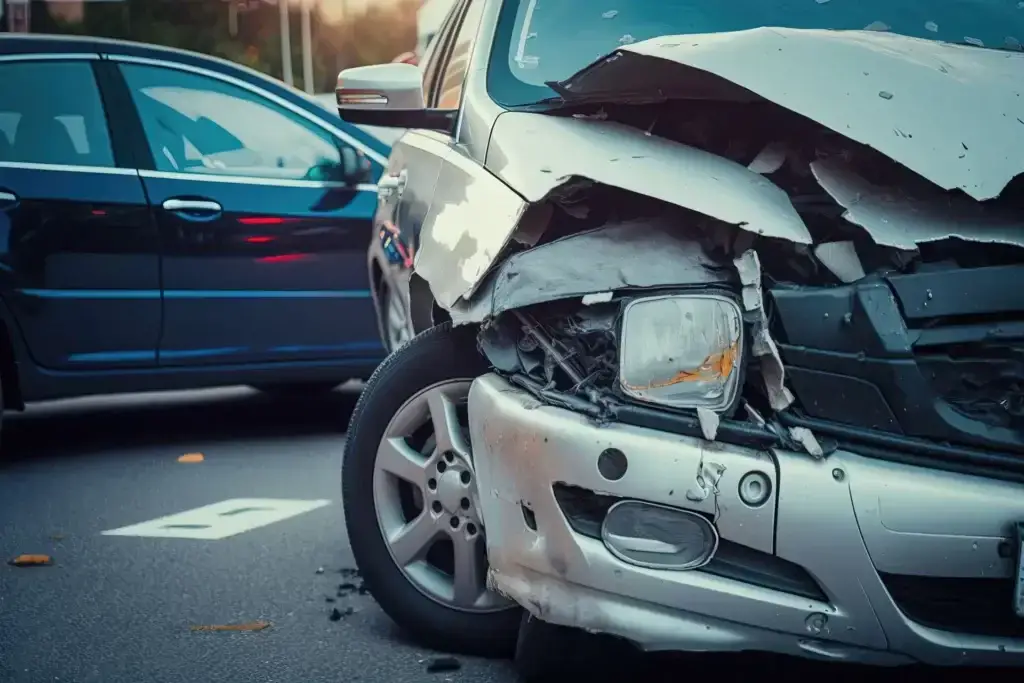

Car crash injuries aren’t always apparent at the scene of the accident or even immediately after. In fact, you may feel “fine” due to the initial adrenaline, then wake up the next day with escalating pain, dizziness, numbness, or cognitive symptoms.
Common injuries can include:
Even a “minor” collision can lead to lasting medical issues when they aggravate prior conditions or cause chronic pain patterns. The goal is to connect the medical story to the crash with consistent treatment, clear documentation, and a plan that addresses both your short-term recovery and long-term ability to function.
Right after a crash, you want to protect your health first, then defend your claim.
Oregon also has crash reporting rules that can apply based on injury, death, towing, hit and run, or damage thresholds, and they expect a report to the DMV within 72 hours in situations that meet the reporting criteria.
Finally, be careful about making recorded statements or signing broad medical releases.
It’s fine to report the basics to your insurer, but you don’t have to volunteer guesses about speed, fault, or injury timelines when you’re still processing what happened.
Just stick to the facts.
In most car accident cases, Oregon’s deadline for an injury claim is two years, but other rules can shorten the practical timeline, and allegations involving public entities can require notice within 180 days. Talk to a lawyer as soon as you can because delay can weaken evidence even when the legal deadline is months away.
Oregon law generally reduces your compensation by the same percentage as your fault, and if you’re more than 50% at fault, you may be ineligible for recovery. That’s why gathering evidence early is so important; it can prevent unfair fault shifting later on.
Personal Injury Protection (PIP) is designed to pay certain benefits promptly, and Oregon requires PIP coverage at a minimum level. In practice, many people use PIP early for medical-related benefits while liability gets sorted out.
Rideshare cases often involve multiple policies and changes in coverage if the driver was waiting for a ride, headed to pick someone up, or transporting a passenger. Portland’s rules describe different insurance requirements for each of these categories, so identifying the period during which the accident happened can be a significant step in your case.
If you were hurt in a Portland car accident, you don’t need to guess your way through recovery and insurance. Don’t let an adjuster rush you into a number before you know the full impact on your health and work.
Oregon’s insurance structure, including required PIP and required UM coverage, can help, but severe cases often require a broader plan that identifies every source of coverage and every responsible party.
At Dozier Law Group, our car accident lawyers can take the pressure off, build a clean liability narrative, prove damages with the proper evidence, and negotiate from a position of strength.
Contact us today for a free consultation.
The sooner you start, the more control you keep over the outcome.