
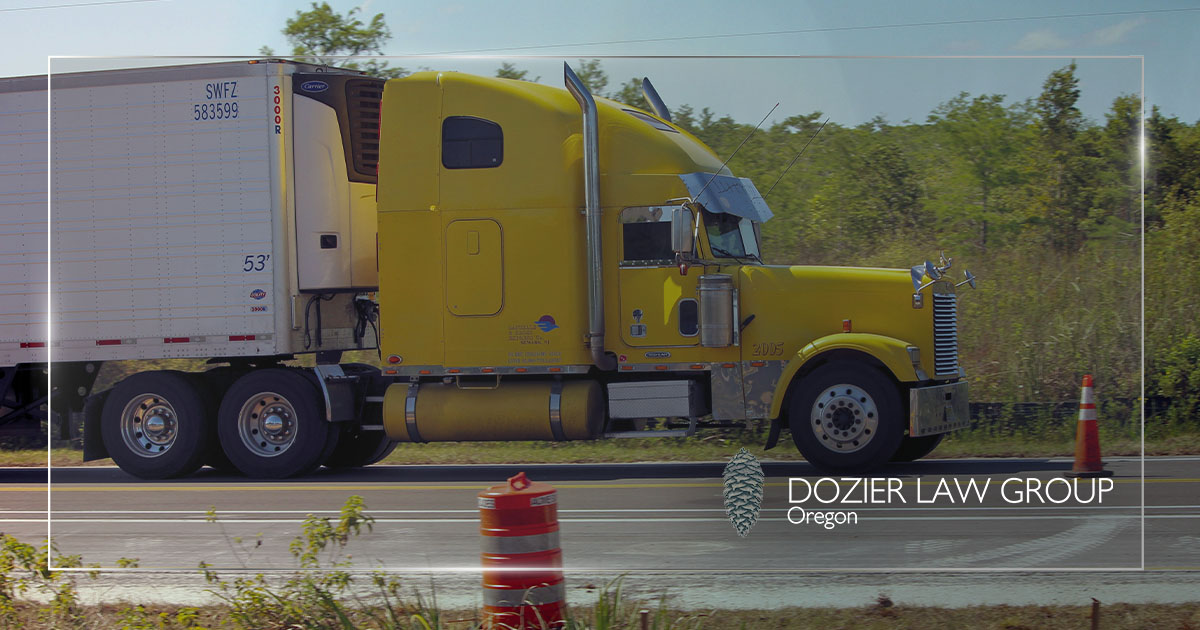
The truck that hit you has been keeping records on itself. Whether you ever see them is another matter.
Truck crashes are more than just car crashes with bigger, heavier vehicles. They involve regulations, onboard computers, corporate defendants, and evidence that can be legally destroyed while you’re still grimacing through physical therapy. Most victims never learn about any of it, and the trucking company’s insurers count on that.
If a semi has turned your commute into a Portland truck accident, here are the hidden factors that will shape your case. We’re talking about physics, data, cargo, and the layers of insurance behind the wheel.
Why Truck Crashes Aren’t Just Bigger Car Crashes
Ponder this figure: 80,000 pounds. That’s the federal weight limit for a loaded semi. It is roughly twenty times the weight of your car.
That size disparity makes for brutal physics. A loaded truck at highway speed needs a space equivalent to two football fields to stop itself. In a collision, the kinetic energy doesn’t split anywhere close to evenly between the two vehicles. Almost all the energy pours into the smaller car. Yours.
That energy transfer is the primary cause of the commercial vehicle accident hazards most drivers miss. It causes plenty of external injuries, for sure, but also internal damage that is not apparent at the scene. Organ damage, internal bleeding, and brain injuries can hide behind a surge of adrenaline for hours or even days. You feel shaken but fine. That doesn’t necessarily mean you’re fine.
Get a medical examination after any collision with a commercial truck. The medical record you create on that day could matter as much as any treatment.
The Truck Was Recording: ELD and Black Box Evidence
Modern semis carry two digital witnesses.
The first is the electronic logging device, or ELD. Federal law requires most commercial drivers to log their hours electronically as FMCSA rules strictly limit their time behind the wheel. Hours-of-service violations—driving over the time limit—are one of the most common hidden truck accident causes. Commercial driver fatigue is the danger those rules were written to prevent. Paper logs used to be easy to fake. ELD data is not.
The second witness is the event data recorder. Think of it as the truck’s black box. It captures speed, braking, throttle position, and steering inputs in the seconds before impact. Semi-truck black box evidence can prove a driver never touched the brakes, and no deposition can argue with such data.
However, there is a catch. This data does not preserve itself for long. ELD records can be overwritten in months. EDR data can vanish as soon as the truck is repaired or scrapped. Furthermore, maintenance records only have to be preserved for so long. This is why one of the first moves in a serious case is a spoliation of evidence letter. That’s a formal legal demand that the trucking company save everything: ELD data, black box downloads, driver logs, inspection and maintenance records.
If you miss the window to get those records saved, ELD data recovery goes from routine to impossible.
Remember: The trucking company knows what its semi recorded. Make sure you get to know it too.
The Cargo Can Cause the Crash
The danger is not always the person behind the wheel. Sometimes it’s the cargo that’s riding behind them.
An overloaded trailer changes the way a truck brakes. A load stacked too high can affect how the truck corners. Cargo that hasn’t been properly secured can shift mid-turn, dragging the trailer into a jackknife or rollover that the driver has no chance to prevent.
This can make a big difference legally, because the trucking company often isn’t responsible for loading the truck. A third-party freight company does. Freight loader negligence, which can include bad weight distribution, haphazard tie-downs, and ignored securement rules, can make that freight company a defendant alongside the carrier. It’s a hidden layer of responsibility that victims rarely spot on their own.
The crash report will say the truck rolled. The loading dock records say why it rolled.
One Crash, Several Insurance Policies
A two-car fender bender usually involves two insurance policies. One for each driver. A commercial truck crash can involve five insurers or more.
The motor carrier has a policy. The driver is probably carrying another, especially as an owner-operator of the rig. The trailer’s owner, the freight loader, the maintenance contractor, and the manufacturer of a failed part can each bring their own trucking insurance policies to the table. Under Oregon law, more than one of those parties can share fault for the same wreck. Also, trucking company liability in Oregon can extend to negligent hiring, training, and supervision of the driver, not just the driver’s mistake on the road.
Why does that matter to you? Because serious injuries can quickly outrun minimum coverage. Finding every policy that can be held liable is often the difference between a settlement that covers your future and one that quits when the first policy runs dry.
More defendants mean more paperwork, of course. But it also means more coverage, and that’s what you want when you’re recovering.
The Evidence Won’t Wait for You to Heal
Truck crashes bury their most important facts in data files, loading docks, and filing cabinets you’ll never see without a legal fight. Dozier Law Group focuses on vehicle accident cases and knows how to move fast on the evidence that Portland trucking companies would prefer to conceal.
If a truck crash has laid you up with painful injuries and bills that no honest person can pay, speak with an attorney before the key evidence disappears.
The truck kept its own receipts. Go get them.