
You’ve watched it forty times. The other driver drifting across the line, the impact, and the airbag dust hanging in the light afterward.
That should end the argument, except the adjuster’s letter still sticks you with thirty percent of the fault. Meanwhile, your camera has been recording over the accident footage every time you’ve started your car since. Dashcam footage of a car accident can be the strongest evidence in a Portland car accident claim, but only if the video survives and only if it’s handled properly from the start.
Here’s how video changes an Oregon claim and what can go wrong with it.
Video Isn’t Automatically Evidence in an Oregon Courtroom
Recording something doesn’t make it admissible. Before a jury ever sees your footage, someone has to authenticate it. In other words, they must establish that the file shows what you say it does, on the day you say it happened, without edits.
That’s usually simple enough. You testify that it’s your camera, your car, you driving, and Oregon’s evidence rules care about whether the recording fairly and accurately depicts the scene. It gets complicated when the file has been trimmed, converted, and posted to social media before anyone thinks about the chain of custody. Each of those steps hands the defense something to nit-pick.
The admissibility of video evidence in Oregon comes down to one key question: Can you prove the file is what you say it is? If you keep the original unedited footage, the answer is yes.
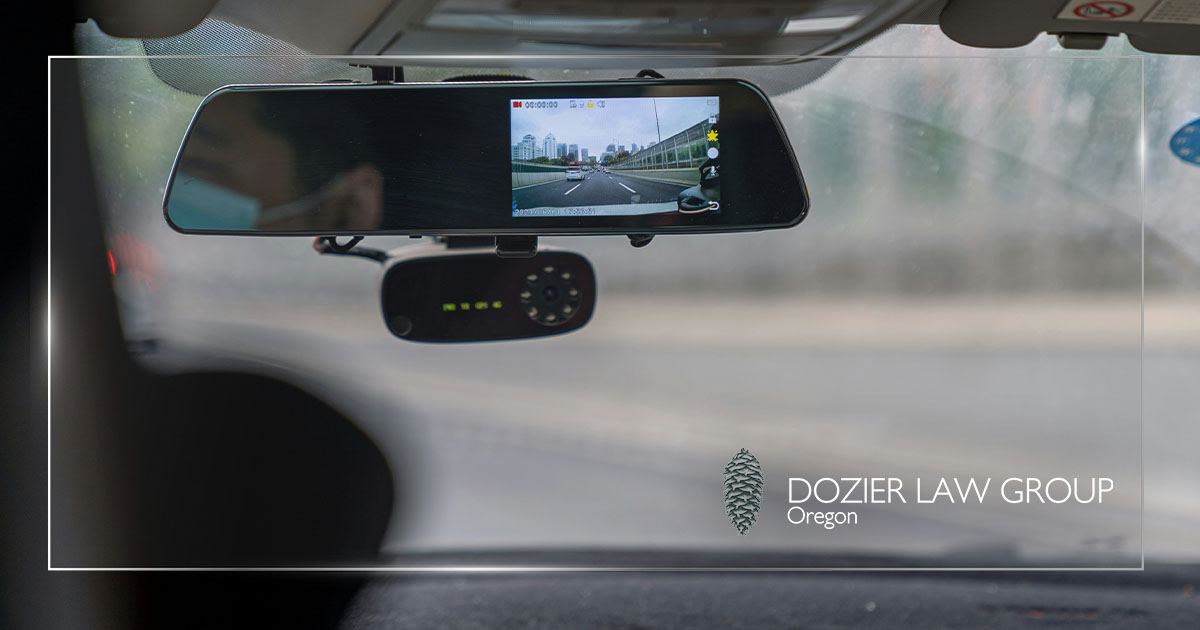
Oregon dashcam laws matter too. Cameras are legal, but state statutes prohibit obstructing your view through the windshield. A unit stuck low and center risks a citation. It’s best to mount your dash cam behind the mirror.
How Oregon’s 51 Percent Rule Can Erase Your Claim
Oregon applies modified comparative negligence to car accident cases. Under the state’s comparative fault statute, you recover only if your share of fault is not greater than the combined fault of everyone else involved. If you’re 50 percent responsible, you can still collect half of your damages. At 51 percent, you get nothing.
That 50 percent line is the whole case for an insurance company. An adjuster doesn’t have to prove you caused the crash. They only have to find enough fault to nudge you over that line. They’ll try to do it with a few friendly questions in a recorded statement about how fast you might have been going, or if you were possibly distracted at the time.
Dashcam video takes that lever away. Proving fault with a dash cam puts a timestamp where speculation might have been. Footage can show that the light was still red when both vehicles entered the intersection. Or that your signal was on for four seconds before you moved. Or that you never left your lane.
Human memory can be unreliable. A frame counter doesn’t get foggy or confused. A video review of clean dashcam footage tends to leave an insurance adjuster with much less to talk about.
Your Camera Is Already Recording Over the Crash
These devices run on a loop, writing over old files as they go. A 32-gigabyte card might hold a day and a half of driving. If you’ve made it home from the hospital and back to work twice since the accident, the video might already have been recorded over.
This is why digital evidence preservation must start the same day as the incident. Take these steps:
- Remove the memory card from the camera. Don’t reformat it and don’t keep driving on it.
- Lock or write-protect the file if your camera offers that option.
- Copy the original file to a computer and to cloud storage. Do not edit it at all.
- Note the camera model and whether its clock was set correctly.
- Keep your footage off social media. Anything you post becomes Portland car accident evidence for the other side too.
Don’t count on somebody else’s camera, either. For example, don’t look for backup from a traffic camera. That usually ends in disappointment, because municipal and business systems purge on their own schedules, sometimes within days, and no one turns over video just because you said “please.” Your card is the copy you control.
Sometimes the Camera Testifies Against You
Your dashcam is not always your advocate. It records what happened, and if what happened includes you aggressively switching lanes or doing 52 in a 40 while glancing at your smartphone, that’s going to be on the file.
Once you make a claim, that footage is discoverable. That’s a lawyer’s way of saying the other side can see it too. The defense can demand the video. If they find you’ve deleted an inconvenient file to help your claim, the consequences can be worse than the footage you tried to hide. Spoliation can get your dashcam footage excluded, or worse, get a jury instructed to assume the worst about you. It can even get your whole case dismissed.
None of this is an argument against owning a camera. Most footage helps, and even unflattering footage beats the alternative of two drivers telling different stories to an adjuster who has already decided to go with the cheaper version. It is an argument, however, for having a lawyer watch your video before anyone else does. Video evidence for car insurance claims gets interpreted, and the first interpretation has the best chance of sticking.
The Footage Only Helps If Somebody Fights With It
You did the responsible thing. You bought the camera, mounted it, and captured the one moment that proves you weren’t at fault. And then the footage went to a company that has a financial interest in finding you at fault.
Dozier Law Group has handled Oregon vehicle claims for more than two decades. We know how local adjusters use comparative fault, what to demand before a memory card gets recycled, and how to put video in front of a jury so they see what you saw.
If you have footage of your crash, or you aren’t sure whether you still do, reach out to our firm before you send it anywhere. The camera did its job. Now you need to make sure somebody does the rest.