
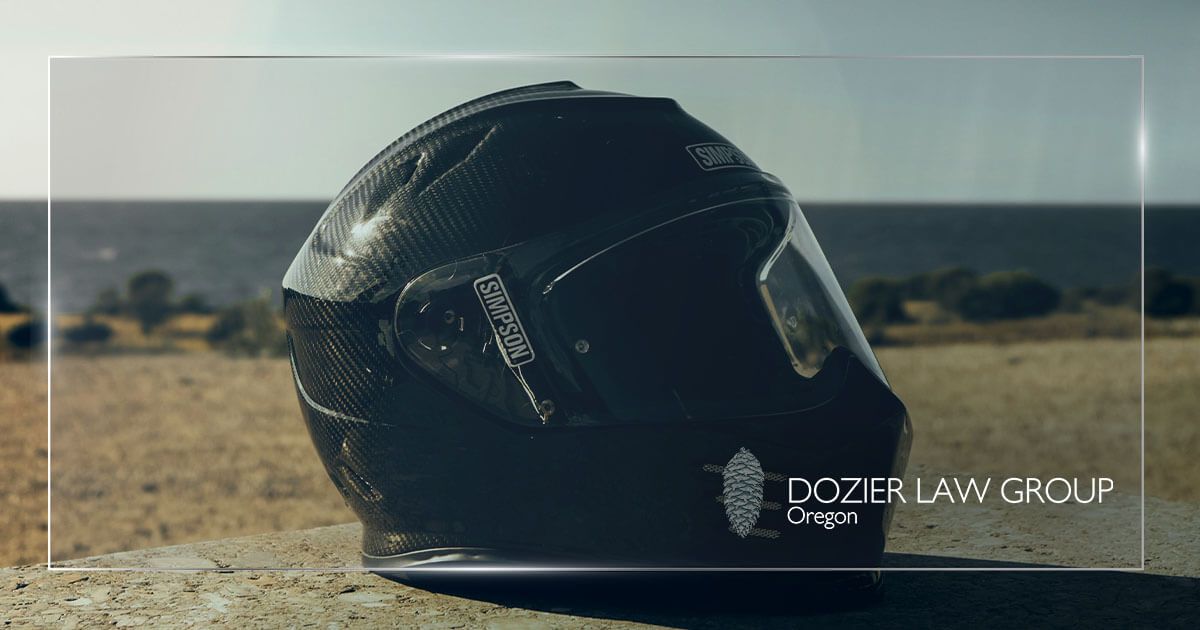
Oregon motorcycle helmet laws are pretty straightforward.
If you ride a motorcycle in Oregon, you’re generally expected to wear a helmet, and so is your passenger. Not a decorative one, not a novelty half-shell with a sticker slapped on the back, but a helmet that actually meets the legal standard tied to DOT compliance.
That sounds simple enough, but helmet use can also affect injury severity in a motorcycle accident, as well as insurance arguments and the value of a personal injury claim. It can also change how the other side talks about fault, responsibility, and preventable harm.
That’s where riders sometimes get blindsided.
The safety issue is just as real. Motorcycles make up a relatively small share of traffic, but riders face a much higher risk of serious injury in a crash. National crash data keeps making the same point over and over. Motorcycle fatalities remain high, and helmet use still matters in a very practical way.
So, while some riders see helmet laws as just another rule, Oregon treats them as both a road-safety requirement and a legal compliance issue.
If you ride in Portland, Salem, Eugene, Bend, Medford, or out along Highway 101 on the coast, the same basic question applies. What exactly does Oregon require, what counts as a lawful helmet, are there any exceptions, and what happens if you get cited or injured while riding without one?
Those are the questions that actually matter.
Mandatory Motorcycle Helmet Requirements Under Oregon Law
Oregon law requires motorcycle operators and passengers to wear a helmet in most ordinary riding situations. That is the baseline rule, and it applies broadly. This isn’t one of those states where the law only covers younger riders or brand-new riders.
Oregon expects nearly everyone on a motorcycle to wear a compliant helmet, and it’s safe to assume that a helmet is legally required.
Helmet requirements aren’t satisfied by just wearing something that looks good. Oregon’s rule ties into DOT standards, which means the helmet has to meet the right legal and safety criteria. That includes proper labeling and actual construction, not just appearance. A thin novelty helmet may look like a workaround, but legally and practically, it usually is not.
For everyday riders, the most important points to keep in mind include:
- Operators typically must wear a helmet
- Passengers generally have to wear one too
- The helmet must meet DOT standards
- A damaged, loose, or fake-compliance helmet can create serious problems
This is one of those areas where the law is stricter than some riders expect. That may be annoying to some people, but it’s still the rules.
How Helmet Use Affects Your Personal Injury Claim
Using or not using a helmet can affect your personal injury claim when the other side argues that not wearing a lawful helmet made your injuries worse. That’s a problem. It doesn’t automatically wipe out your case, but it can absolutely change its shape.
This is where the Oregon comparative negligence motorcycle issue starts to matter.
If another driver caused the crash, that driver may still be legally responsible. But if you weren’t wearing a compliant helmet and you suffered head, face, or brain injuries, the defense may argue that some part of the damage could have been reduced. In other words, they may not deny causing the collision, but they may fight about how much of the injury they should have to pay for.
That is a big distinction. Riders sometimes assume the helmet question only matters for traffic enforcement. It doesn’t. In a serious injury case, it can become a central theme.
Was the rider wearing a DOT-compliant helmet?
Was it fastened correctly?
Would the injury have looked different if the rider had followed the law?
Those questions come up a lot more often than people think.
That is one reason riders often end up talking with a Portland motorcycle accident lawyer after a serious wreck. At that point, the issue is no longer just who caused the crash. It becomes who caused which part of the harm, and how that changes the total value of the claim.
Exceptions to Oregon Motorcycle Helmet Regulations
The exceptions to Oregon motorcycle helmet regulations are pretty limited, and most riders on standard motorcycles won’t qualify for them. Oregon doesn’t have a broad exception for adults who simply prefer not to wear a helmet.
Most of the real exceptions are tied to vehicle design, not rider preference. For example, enclosed vehicles and certain enclosed autocycles may fall outside the normal helmet requirement. That’s because the law treats an enclosed cab differently from an open motorcycle setup.
Once you’re talking about a rider sitting inside a protective enclosure, the rules change.
But don’t assume that anything with three wheels is automatically exempt. Oregon looks more closely at the vehicle’s structure and how much of it is enclosed. A three-wheeled vehicle without an enclosed cab may still be subject to the standard helmet requirements.
The most relevant exceptions usually involve:
- Riding within a fully enclosed cab
- Certain enclosed autocycles
- Limited vehicle-design situations covered by statute
Bottom line: if you’re on a standard motorcycle on an Oregon road and your head is out in the open air, you should assume the helmet rule applies.
That’s the safest legal assumption, and in most cases, it’s the correct one.
Consequences of a Helmet Law Citation in Oregon
Receiving a helmet law citation in Oregon usually means you’re dealing with a traffic violation, and it can create more problems than just the ticket itself.
On the surface, it may seem minor.
For some riders, maybe it is. But it can still carry practical consequences that matter later.
First, there is the citation itself. That means fines, hassles, and a formal record that you were allegedly riding illegally. Some may shrug that off, but if there is also a crash involved, that citation may become part of the insurance file and part of the defense story.
Suddenly, it’s not just a ticket. It’s evidence that the other side can use against you.
That’s especially true if you suffered head injuries. The defense may point to the helmet citation and try to frame the injury as partly self-inflicted or at least made worse by noncompliance. That doesn’t automatically win the argument for them, but it definitely gives them something to work with.
There’s also a separate issue if a passenger wasn’t wearing a helmet, which can trigger its own legal problems. Many riders forget that the law isn’t just about protecting themselves. It also covers passengers, and Oregon treats that seriously, too.
Steps to Take After a Motorcycle Accident in Oregon
After a motorcycle accident in Oregon, you should get medical attention, document everything, and preserve the helmet and other gear exactly as they are. The helmet may become evidence, so do not throw it away; repair it, or clean it up before someone has had a chance to look at it properly.
This part matters a lot more than riders sometimes realize. In a serious crash, the helmet itself may help answer key questions. Once the helmet is altered or discarded, those questions get harder to answer. Medical care also matters immediately, even if the rider thinks they mostly feel okay.
Head injuries, facial injuries, and neck injuries are not always obvious right away. The longer someone waits to get checked, the easier it becomes for the insurer to question the seriousness of the injury or try to disconnect it from the crash.
The basic steps after a motorcycle wreck in Oregon usually look like this:
- Get evaluated by medical professionals as soon as possible
- Call law enforcement so there is a report
- Photograph the motorcycle, the scene, the roadway, your injuries, and your helmet
- Preserve your helmet and other safety gear exactly as they are
- Get eyewitness names and contact information
- Notify your insurer, but be careful with recorded statements
- Speak with counsel before agreeing to a quick settlement if the injuries are serious
This is where a Portland motorcycle accident lawyer often enters the conversation.
Once there are serious injuries, helmet-compliance questions, or disputes about what the gear did or didn’t prevent, the case can get complicated very quickly.
Dozier Law Group Advocates for Motorcycle Accident Victims
Oregon motorcycle helmet laws are strict enough that most riders should treat helmet use as mandatory rather than optional. If you ride a standard motorcycle on Oregon roads, the rule generally applies to you and to your passenger.
That makes helmet choice more important than many riders want to admit. It’s not just about comfort, style, or habit. It’s about legal compliance, crash protection, and what happens later if someone else causes a wreck and the insurance company starts digging into your choices.
At that point, the helmet becomes more than gear. It becomes evidence.
And that’s when you need an experienced motorcycle accident lawyer in your corner.
Reach out today to learn more.