
Portland truck accident laws exist to keep commercial traffic moving safely through the city while protecting people who share the road with tractor-trailers.
When a crash involving a semi-truck occurs on corridors like I-5 near the Rose Quarter or I-84 heading toward the Gateway area, the legal issues usually get complicated quickly because state rules, federal safety standards, and multiple insurance policies can all apply at once.
The result is that a routine-looking collision can turn into a high-stakes commercial vehicle accident, where the details matter more than most drivers expect.
If you’ve been involved in an accident with a big rig, it’s important that you understand how Oregon trucking rules and federal regulations work together, how liability gets assigned, what evidence helps most, and why the deadlines can be easy to miss if you treat a truck case like a standard car accident.
Oregon enforces commercial trucking safety by aligning its standards with federal rules that apply to interstate carriers and most professional drivers. In practice, that means many Portland truck accident laws questions boil down to this: Did the driver and motor carrier follow the Federal Motor Carrier Safety Administration rules, and did they also follow Oregon requirements for operating a heavy commercial vehicle on Oregon roads?
The largest federal framework in Oregon is the FMCSA, which governs driver qualification, vehicle maintenance, cargo securement, drug and alcohol testing, and fatigue controls such as hours of service.
The hours-of-service rules limit driving time and require off-duty time, and they also create paper or electronic trails that investigators can use to confirm whether a driver exceeded safe limits.
Practically, trucking compliance is not one rulebook; it’s a stack of overlapping duties, and proving a violation often requires pulling records quickly before a carrier overwrites, loses, or destroys them in the normal course of business.
Dozier Law Group has years of expertise in Portland and throughout Oregon, navigating truck Accident laws. Trust our team for effective representation, as we leverage our deep understanding of local regulations and a track record of success to guide you through the complexities of trucking accident litigation
Commercial truck crashes in Portland usually happen because something predictable broke down, or there was negligent actions taken by the driver, trucking company or third-party entities. The most common root causes show up again and again in police narratives and insurer defenses, even when the carrier initially claims the wreck was unavoidable.
Some of these causes include:
This sits near the top of the list because it turns small mistakes into violent outcomes.
When drivers commit hours of service violations, they drive longer than the rules allow, they react more slowly, drift lanes, and misjudge stopping distance. Those violations can also include logbook falsification, where the paper trail says the driver rested even though fuel receipts, GPS pings, toll data, or delivery timestamps show otherwise.
The FMCSA’s hours of service structure are designed to reduce fatigue-related crashes, so proof that a driver ignored those limits can move a case from ordinary negligence into stronger territory.
Speed and following distance issues can also cause major harm, especially when a loaded tractor-trailer approaches congestion. That risk rises on urban merges and bottlenecks, including the I-5 and I-84 interchange, where traffic patterns change quickly. A truck that can’t stop in time may underride a smaller vehicle or cause a chain reaction crash involving multiple cars.
Mechanical failures are another common issue. Faulty brakes, tire blowouts, steering issues, and lighting failures often trace back to skipped inspections or deferred repairs. Even when a part fails suddenly, the real question becomes whether a reasonable inspection and maintenance plan would have caught the issue earlier.
Portland also sees truck wrecks tied to turning and trailer dynamics.
Trucks, especially when hauling trailers, need more room to turn, and they can swing wide into neighboring lanes, especially in tighter industrial routes and city streets. Trailer maneuverability problems can lead to rollovers and jackknife collisions, which is why jackknife accident recovery claims often focus on speed, braking, load balance, and training.
Finally, cargo issues arise more often than most people realize. Improperly secured loads can shift, raise the trailer’s center of gravity, and destabilize it.
Overweight or uneven loads can strain braking systems and cause excess wear on tires, which can increase the required stopping distance. When a carrier, shipper, or loader cuts corners, the crash may appear to be driver error, even though the real cause was a preventable loading failure.
Commercial truck crashes in Portland usually happen because something predictable broke down, or there was negligent actions taken by the driver, trucking company or third-party entities. The most common root causes show up again and again in police narratives and insurer defenses, even when the carrier initially claims the wreck was unavoidable.
Some of these causes include:
This sits near the top of the list because it turns small mistakes into violent outcomes.
When drivers commit hours of service violations, they drive longer than the rules allow, they react more slowly, drift lanes, and misjudge stopping distance. Those violations can also include logbook falsification, where the paper trail says the driver rested even though fuel receipts, GPS pings, toll data, or delivery timestamps show otherwise.
The FMCSA’s hours of service structure are designed to reduce fatigue-related crashes, so proof that a driver ignored those limits can move a case from ordinary negligence into stronger territory.
Speed and following distance issues can also cause major harm, especially when a loaded tractor-trailer approaches congestion. That risk rises on urban merges and bottlenecks, including the I-5 and I-84 interchange, where traffic patterns change quickly. A truck that can’t stop in time may underride a smaller vehicle or cause a chain reaction crash involving multiple cars.
Mechanical failures are another common issue. Faulty brakes, tire blowouts, steering issues, and lighting failures often trace back to skipped inspections or deferred repairs. Even when a part fails suddenly, the real question becomes whether a reasonable inspection and maintenance plan would have caught the issue earlier.
Portland also sees truck wrecks tied to turning and trailer dynamics.
Trucks, especially when hauling trailers, need more room to turn, and they can swing wide into neighboring lanes, especially in tighter industrial routes and city streets. Trailer maneuverability problems can lead to rollovers and jackknife collisions, which is why jackknife accident recovery claims often focus on speed, braking, load balance, and training.
Finally, cargo issues arise more often than most people realize. Improperly secured loads can shift, raise the trailer’s center of gravity, and destabilize it.
Overweight or uneven loads can strain braking systems and cause excess wear on tires, which can increase the required stopping distance. When a carrier, shipper, or loader cuts corners, the crash may appear to be driver error, even though the real cause was a preventable loading failure.
Fault in a trucking claim typically falls on whoever created the risk and had the power to prevent the accident, which often means more than just the driver.
Trucking company liability becomes a central issue because commercial carriers control hiring, training, dispatch pressure, maintenance schedules, lack of safety compliance, and poor choices, which can directly cause a collision.
A typical investigation examines several potential responsible parties simultaneously:
Oregon’s comparative fault laws are especially important when insurers push hard to assign partial blame to the injured person. Under Oregon’s modified comparative negligence statute, a claimant can recover damages if their fault is not greater than the combined fault of the others, and the recovery is reduced by the same amount as the claimant’s percentage of fault.
This matters in real life because even a small allegation, like claiming you “should’ve moved over sooner,” can become a bargaining chip for the insurer.
In a truck accident case, liability isn’t only about what happened just before impact. It can also be about the weeks or months of decisions before that day, whether the carrier enforced Oregon trucking safety standards, whether it followed FMCSA rules, and whether its internal records match the story it tells after the crash.
The most important evidence after a truck crash is whatever proves how the truck was operated, maintained, and dispatched, and you need it quickly because some records can disappear.
You can take meaningful steps at the scene, but the highest value evidence is usually in the carrier’s control, which is why preservation letters and early legal action often matter in truck accident law disputes.
Start with what you can gather immediately:
Note nearby businesses that might have exterior cameras.
If you can safely do it, photograph the truck’s DOT number, license plates, and any placards or trailer identifiers. Those details help identify the motor carrier and the correct insurance policies.
Then focus on the commercial records that often determine a trucking company’s liability.
Key items often include:
Hours of service logs can be especially important, as they can confirm whether fatigue likely played a role and reveal logbook falsification when compared with independent timestamps.
Process steps that usually protect a claim in the early days include:
This evidence supports damages, which is why insurers try to minimize it even when fault is clear.
Common damages in a Portland truck case can include:
If you’re pursuing damages for a jackknife accident, evidence of speed, braking, load distribution, and trailer condition becomes especially important because the carrier may claim “the trailer just slid,” even when there were preventable issues that triggered the jackknife.
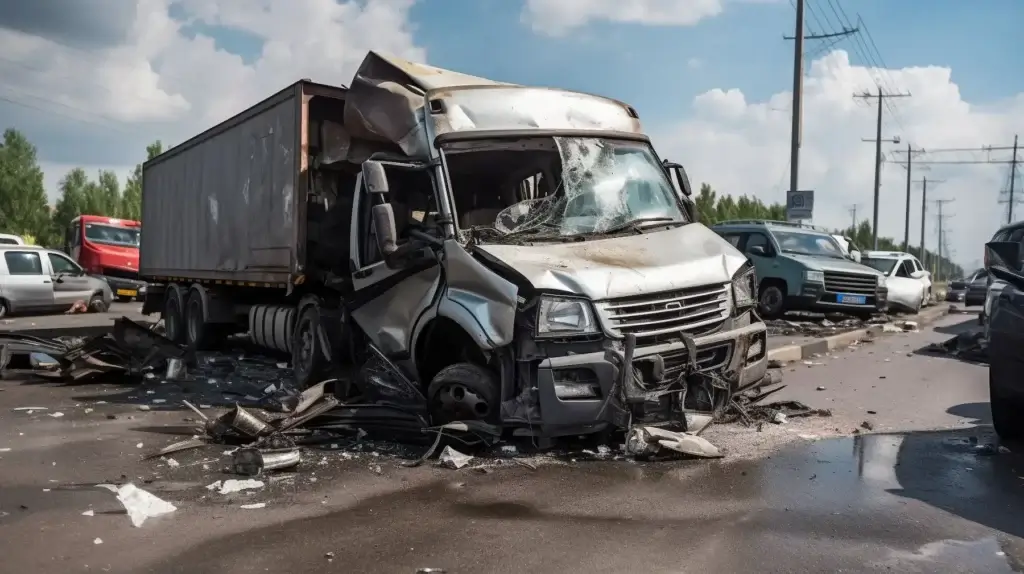

One of the most searched questions after a crash is: “What is the statute of limitations for truck accidents in Oregon?” For many people hurt in Portland collisions, the statute of limitations for Oregon truck accident injury claims is two years from the date of injury and missing it can end your case even if the truck driver clearly caused the crash.
Wrongful death claims have their own timeline, and Oregon’s wrongful death statute provides a three-year limitations structure with specific discovery language and outside limits, so families should treat it as its own category rather than assuming that the same two-year deadline applies.
The truth is that waiting can be risky even when you still have time on the calendar.
A Portland truck accident lawyer helps by establishing your case’s validity early, preserving evidence, identifying every liable party, and pushing back when the trucking insurer tries to control the narrative. That work often overlaps with what an Oregon semi-truck accident lawyer does statewide, but Portland cases add local road dynamics, urban crash patterns, and the reality that insurers often move fast after wrecks near major freight routes.
Early action often matters most in three ways:
In claims involving FMCSA regulations in Oregon, your lawyer can translate compliance failures into understandable proof. Hours of service violations, logbook falsification, skipped inspections, and unsafe dispatch practices may sound technical, but they often boil down to a clear theme: the carrier valued speed and profit over safety.
When the evidence supports that theme, it increases your settlement leverage and improves the odds of getting maximum compensation.
A well-run trucking claim also accounts for medical realities. Serious truck crashes often cause injuries that evolve over weeks, not days, including concussions, spinal injuries, complex fractures, and chronic pain conditions.
Your lawyer can help document your treatment, connect symptoms to the crash, and plan damages in a way that accounts for future needs rather than just today’s bills.
If you suspect trucking company liability, hours of service violations, or logbook falsification played any role in your crash, take the situation seriously right away.
In a commercial vehicle accident case, fast action is not about being aggressive; it’s about keeping the facts intact, so you have a fair shot at compensation, whether you’re pursuing routine injury damages or complex jackknife accident recovery.
That’s when you want Dozier Law Group in your corner.
Contact us today for a fee consultation.